
The Art of Living Well
Hospitality
The Art of Making Room
Hospitality begins with the feeling that there is room for you here. A place prepared with care, a conversation allowed to wander, something shared at the table — and enough ease for everyone to remain themselves.
Welcome is not performance. It is the feeling of being expected.
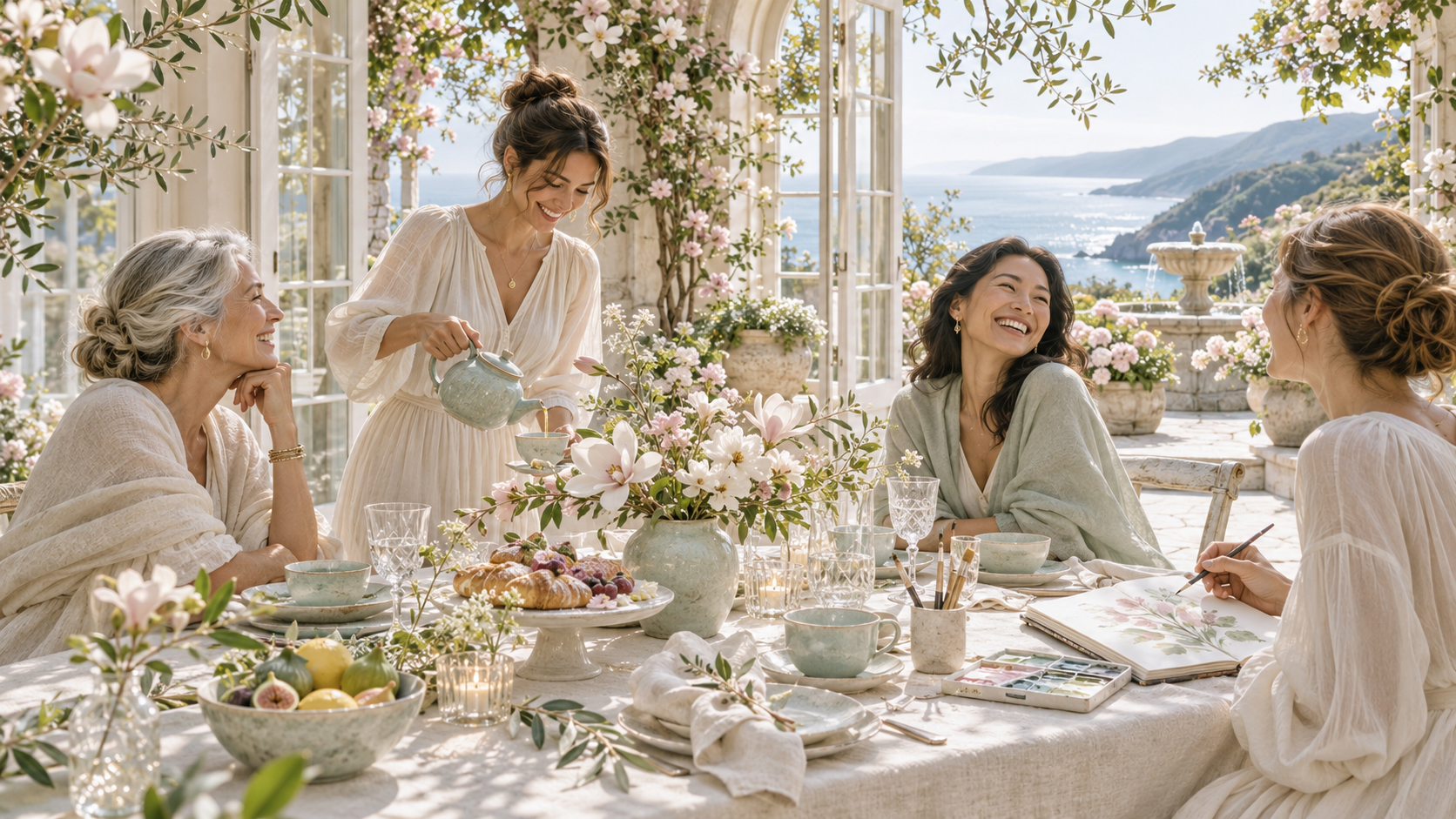
Hospitality becomes shared life when everyone has room to bring something of herself to the table.
Begin with recognition
What helps you feel genuinely welcomed?
Think of a place where you felt naturally at ease. Perhaps someone remembered how you take your tea, pulled out a chair, let the conversation wander, or simply made it clear you did not need to be anything other than yourself. Hospitality often begins in these small gestures.
When have I felt most at ease in another person’s care — and what made that possible?
The language of welcome
Hospitality is more than hosting.
A beautiful table can be part of it, but the deeper gesture is simpler: making room for another person while remaining present in your own life.
01
Welcome begins before words.
Light, pace, tone, scent, and the way a place is prepared quietly communicate care. The details do not need to impress. They only need to help someone feel considered.
02
Care does not require excess.
Hospitality does not ask you to exhaust yourself in order to make someone comfortable. Enoughness belongs here too. The host is still part of the gathering.
03
Receiving belongs at the table too.
When we let another person bring something too — a story, a dish, help, affection, appreciation — hospitality becomes shared rather than performed.
Practices of shared life
Begin with one gesture of welcome.
Choose one gesture that feels natural today. Hospitality can begin with a cleared chair, a cup of tea, your full attention, or the willingness to let someone contribute too.
01Make RoomPrepare one place, not a performance.
Choose one small area where someone might arrive: a chair, the table, an entryway, a kitchen counter, or a corner for conversation.
- Remove only what makes the space feel crowded or difficult to use.
- Add one gesture of care: water, tea, a flower, comfortable light, a clean cloth, or an open window.
- Stop before preparation becomes performance. Let the room remain lived in.
NoticeWhat changes when I prepare for ease rather than impression?
02Hospitality of PresenceOffer your full attention as a gift.
Presence can be one of the most generous things we offer. This practice is less about what you provide and more about the quality of attention you bring.
- When someone speaks, let the last word land before preparing your response.
- Notice the urge to fix, advise, entertain, or fill the silence.
- Stay with curiosity. Ask one gentle question only if it genuinely opens the conversation.
ReflectWhat becomes possible when I stop trying to manage the moment and simply accompany it?
03The Shared TableGather simply around something ordinary.
A shared table does not need an occasion. Tea, fruit, soup, a simple dessert, or something already in the kitchen can be enough.
- Invite one person, or gather the people already near you.
- Choose one small atmospheric gesture — music, flowers, candlelight, or a view you enjoy.
- Let conversation be the event. The food supports the gathering; it does not need to carry it.
Carry with youWhat helps a gathering feel alive rather than produced?
04Receive Without ObligationLet care reach you before deciding what you owe.
Hospitality becomes reciprocal when we allow ourselves to be received too. Practice letting a kindness arrive without immediately balancing the exchange.
- Notice one compliment, offer of help, gift, affectionate gesture, or moment of care.
- Pause before minimizing it, refusing it, or rushing to reciprocate.
- Try a simple response: “Thank you. I’d like that.” Or simply, “Thank you.”
NoticeWhat does receiving ask me to trust?
05Farewell & ReturnComplete the encounter with warmth and room to return.
Hospitality includes endings. A graceful farewell does not cling to the moment; it lets the gathering complete and leaves the relationship open.
- Let the ending be clear rather than apologetic or abrupt.
- Offer one true expression of appreciation for the time shared.
- Afterward, restore the room gently and return to yourself before moving on.
ReflectHow do I want people — and myself — to feel when an encounter is complete?
The grace of enough
The welcome does not need to be elaborate to be felt.
A cup of tea. A clean glass. A flower from the garden. The phone turned over. A chair made comfortable. Often it is the smallest gestures that let someone feel they have been thought of.
Enough leaves room for everyone — including you.
The Atelier companions
For the questions that deserve more time.
The practices on this page can be enough for today. Deeper companion studies can hold the parts of hospitality that become personal: receiving, reciprocity, gathering, boundaries, atmosphere, and the way we remain ourselves in relationship.
Receiving & reciprocity
The Practice of Receiving
A companion for noticing what happens when help, affection, appreciation, silence, or generosity reaches you — and practicing the grace of receiving without immediate repayment.
Gathering & atmosphere
The Art of Gathering
A deeper study of welcome, the shared table, conversation, simple rituals, seasonal gatherings, and the atmospheric details that help people feel more at ease and more themselves.
These companion studies belong to the deeper Atelier layer of Hospitality. They can be developed from the existing Lifestyle Rituals field-guide and Salon material without adding unnecessary work to the public room itself.
If something stays with you
A few places to linger
You do not need to keep reading. But if a question follows you from this room, these reflections offer somewhere quiet to continue.
The Language of Welcome
For the woman who creates room for everyone else, and is learning to feel welcomed within the life she has made.
Read the reflection →The Grace of Receiving
For discovering that help, affection, and generosity can be welcomed as freely as they are offered.
Read the reflection →The Beauty of Enough
For remembering that the loveliest gathering is not the most perfect one, but the one we allow ourselves to enjoy.
Read the reflection →Carry it into your life
Leave a little room for life to arrive.
Perhaps what arrives is another person. Perhaps it is conversation, help, beauty, laughter, quiet, or your own presence at the table. You do not have to orchestrate the whole experience. Sometimes the welcome is simply the room you leave for it.
There is room for you here — and room for me too.
